Choosing the right private label hair straightener manufacturer is one of the most consequential sourcing decisions a beauty brand can make. It comes down to six practical checks: product quality, branding customization, minimum order quantity (MOQ), compliance documentation for your target market, production capacity, and after-sales support. The right hair straightener factory should not only quote a competitive unit price but also protect your brand reputation, handle repeat orders reliably, and grow with your business as you move from a small test shipment into full-scale distribution across retail, Amazon, and B2B channels.
For beauty brands, importers, wholesalers, and private label startups, the cost of picking the wrong hair straightener supplier goes well beyond a single bad order. A straightener that overheats, fails certification in your market, or arrives with misprinted logos can damage shelf presence, trigger returns, and lock up cash flow. This guide walks through the evaluation process in the order most buyers actually work through it, and closes with concrete questions you can put directly to any OEM hair straightener factory on your shortlist.
1. Check the Manufacturer's Experience and Production Capabilities
Does the Supplier Have Relevant Hair Tool Manufacturing Experience?
A catalog page full of hair straightener photos is not the same as real manufacturing experience. Before you invest time in back-and-forth emails, look for evidence that the supplier actually builds hot styling tools rather than merely reselling them from someone else's line. The best private label hair straightener manufacturers can show you a track record of heated appliance production, not just a website that lists generic product categories.
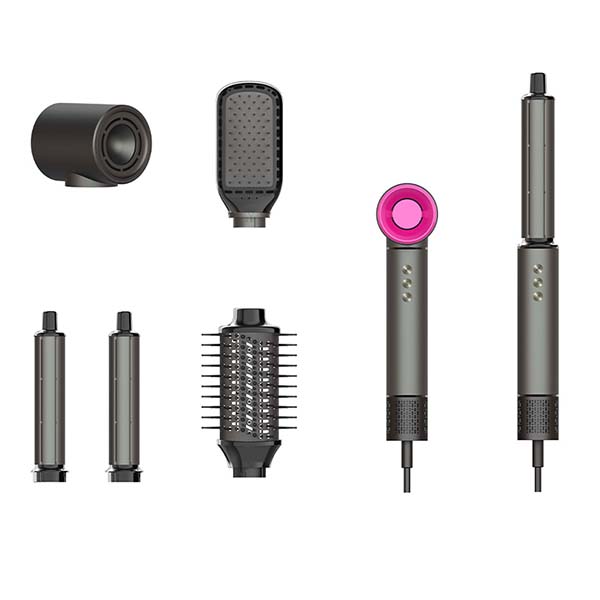
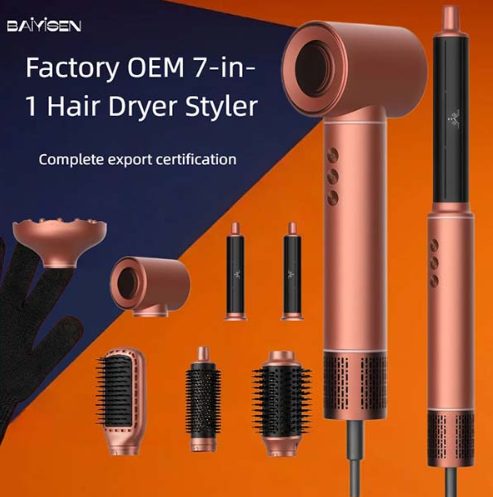
Start by asking for a few specific things: a list of hair straightener models they currently produce, sample photos or video of the heating plates and internal construction, and a brief history of how long they have been making heated styling appliances. A factory that has spent years on hair dryers, hot air brushes, or garment steamers can often transfer that electronic and thermal engineering knowledge into hair straighteners, but they should still be able to show you a working straightener sample rather than a generic marketing render.
Also pay attention to whether the supplier can support both the product and its packaging. Private label hair straightener work rarely stops at the unit itself; you will likely need custom boxes, instruction manuals, warning labels, and barcode placement. A manufacturer that only handles the device and leaves packaging to a separate vendor introduces another coordination point and another place where miscommunication can happen.
Evaluate Factory Capacity and Production Management
Once you are satisfied the supplier knows how to build a hair straightener, the next question is whether they can build your volume on time. Ask for concrete numbers rather than adjectives. How many production lines are dedicated to heated appliances? What is the monthly output range for a typical straightener model? How large is the finished-goods warehouse, and how do they handle peak season (often two to three months ahead of holiday retail windows)?
Quality management matters as much as raw capacity. Ask whether the factory runs incoming-material inspection on heating elements and plastic housings, in-line testing during assembly, and final-power and temperature checks before packing. A reputable manufacturer should be able to describe their sampling standard (for example, an AQL-based inspection) rather than just saying "we check every unit."
For reference, a factory like
Shenzhen Baiyisen Health Technology operates a 15,000 m² facility with six production lines, twelve manufacturing machines, and a 5,000 m² warehouse. These are the kinds of verifiable figures you should be comparing across shortlisted suppliers, rather than relying on phrases like "professional manufacturer" or "high-quality supplier."
2. Compare Private Label Customization Options
This is the section that most directly matches what private label buyers are actually searching for. "Private label" means different things to different factories, so get specific about what is and is not included before you compare quotes. Whether you are looking for custom hair straighteners with your brand logo or exploring white label hair straightener options for a quick market entry, understanding the customization tiers saves time and money.
Custom Logo and Branding
The most common form of customization is putting your brand name on the device itself. Depending on the surface material and construction, this can be done through pad printing, laser marking, or heat transfer. Each method has trade-offs: laser marking tends to hold up well on metal or dark plastic but changes the surface finish; pad printing is flexible for multi-color logos but may wear over repeated contact with heated plates or styling tools.
Beyond the logo on the handle, ask about branding on the box, the manual, the warranty card, and even the power cord label. Consistency across all touchpoints is what makes a product feel like your brand rather than a generic device with a sticker on it. When evaluating an OEM hair straightener factory, ask to see photo examples of previous logo projects on similar housing materials.
Product Color and Packaging Customization
Color is another frequent point of confusion. A factory may offer "custom color" but mean something very specific: Pantone-matched ABS housing, subject to a color-batch MOQ, with a lead time for new mold or paint-mixing cycles. In contrast, "standard color" usually means an existing in-stock housing in black, white, or another common shade.
Packaging customization ranges from dropping your logo on a generic white box (low MOQ, fast turnaround) to a fully custom-designed retail box with embossing, color printing, and interior fitment (higher MOQ, longer lead time). Confirm up front which tier you are buying, because the same unit price can produce very different landed costs depending on packaging depth. For hair straightener wholesale programs, packaging consistency across thousands of units is especially important for shelf presentation.
Standard Products vs. Customized Private Label Hair Straighteners
Use the comparison below to position your project before you negotiate. If you are launching a new brand on a tight budget, starting with a standard model and light branding is almost always faster and cheaper than full customization. If you are an established distributor, deeper customization may be worth the MOQ and lead time.
|
Comparison factor
|
Standard product
|
Private label product
|
|
Product design
|
Existing design from the supplier's catalog
|
Existing design with agreed branding or targeted modifications
|
|
Logo
|
Unbranded or supplier's own logo
|
Custom logo via printing, laser marking, or other agreed process
|
|
Color
|
Available standard colors only
|
Custom colors, subject to MOQ and technical feasibility
|
|
Packaging
|
Neutral or standard retail box
|
Custom packaging, manual, and labeling options
|
|
MOQ
|
Supplier-dependent, often lowest tier
|
May rise with customization level and color batches
|
|
Lead time
|
Depends on stock and production schedule
|
Depends on branding, packaging, and material procurement
|
Treat this table as a starting point, not a final contract. Every supplier's written quotation and confirmed sample should override the general guidance above.
3. Understand MOQ, Pricing, and Total Purchasing Costs
What Is a Reasonable MOQ for Private Label Hair Straighteners?
There is no universal MOQ that applies to every factory. A minimum order quantity is usually set by the cost of custom materials: a new color batch, a logo mold or setup, a custom printed box, or a specific plug and voltage configuration. That means the same hair straightener manufacturer can quote very different MOQs depending on how deep your customization goes.
When you talk to a supplier, ask these four questions rather than settling for a single "MOQ" number:
-
What is the MOQ for a standard model in an existing color, with only my logo applied?
-
What is the MOQ if I add a custom Pantone color to the housing?
-
What is the MOQ for custom retail packaging versus a neutral box?
-
Can I order a small sample run first, and do repeat orders at the same branding carry the same MOQ?
For context, a manufacturer like Baiyisen sets its standard single-color product MOQ at around 1,000 units. That figure applies to standard single-color configurations; custom colors, deeper packaging, or model-specific modifications may carry different thresholds, so always confirm the exact conditions in writing. Many private label hair tool programs sit in the 500 to 2,000 unit range for first orders, with lower thresholds for repeat business.
Look Beyond the Unit Price
The unit price on a quotation sheet is only one line item. A buyer comparing two suppliers should also build a landed-cost checklist that includes sample fees, logo setup or plate-making charges, custom packaging costs, freight and insurance, import duties based on your HS code, and the expected cost of handling defective units.
Use this checklist when you evaluate quotes:
|
Cost item
|
What to confirm
|
Watch-outs
|
|
Unit price (per piece)
|
At which order volume, in which currency
|
Does it include the logo or is that extra?
|
|
Sample fee
|
Whether it is refunded on bulk orders
|
Express shipping to your country can exceed the sample itself
|
|
Customization charges
|
Logo setup, color batch, packaging plate fees
|
One-time vs. per-order charges
|
|
Packaging
|
Box material, printing, manual, barcode
|
Custom boxes often require their own MOQ
|
|
Shipping and insurance
|
FOB, CIF, or DAP terms
|
Hair straighteners contain heating elements; freight classification matters
|
|
Defect reserve
|
Expected defect rate and replacement policy
|
Cheap units with high defect rates can cost more than a slightly pricier reliable supplier
|
When two quotes look close on unit price, the one with lower hidden fees and clearer defect handling often wins over the full program. This is especially true for hair straightener wholesale buyers who place multiple orders per year.
4. Verify Product Quality and Safety Compliance
Check Heating Performance and Temperature Control
A hair straightener's core job is to heat up quickly and hold a stable temperature through repeated passes. Evaluate a sample by checking these points rather than relying on marketing claims:
-
How long do the plates take to reach the rated temperature from a cold start?
-
Does the temperature hold steady, or does it fluctuate noticeably during use?
-
What are the heat settings, and do they match the product specification sheet?
-
What material are the plates (ceramic, tourmaline-coated, titanium, aluminum) and how is the surface finished?
-
Does the unit have anti-scald edges, auto-shutoff, or a heat-resistant tip?
Do not assume that every model from the same factory has the same feature set. Auto-shutoff, ionic technology, or a digital temperature display may be premium features on certain SKUs, not universal across the line. Match the product specification to the model number you are actually quoting.
Review Quality Control Procedures
Before you place a bulk order, ask the supplier to walk you through their QC flow: incoming inspection on heating elements and plastic housings, in-line checks during assembly, final electrical and temperature testing, and sampling standard for finished goods. A factory that cannot describe this process in concrete terms is a risk, even if their samples look good.
You can also request a third-party inspection (such as a pre-shipment inspection by SGS, Intertek, or Bureau Veritas) for your first order. The cost is small relative to a full container of goods and gives you an independent baseline for future repeat orders. Established private label styling tools manufacturers typically welcome this kind of oversight because it protects both parties.
Confirm Compliance for Your Target Market
Hair straighteners are electrical personal care appliances, and every major market has its own safety and EMC requirements. The key is not to collect every certificate you see, but to confirm that the certifications on file actually cover the specific model and voltage you are importing.
Commonly referenced marks include CE and RoHS for the European market, FCC for the United States, UL or ETL for US safety certification, and CB as an international test report framework. These are not interchangeable, and they are not automatically required for every product. A 110V model built for the US market does not need the same documentation as a 230V unit sold in Europe. Work backwards from your target market and model, then ask the supplier to share test reports that match both.
If you are selling into the UK, Japan, Australia, or the Middle East, confirm plug type and voltage separately; a CE mark alone does not grant UKCA or PSE compliance. A manufacturer that already exports to 70+ countries, as Baiyisen does, will typically have experience with multiple plug standards and regional requirements, but you should still verify documentation for your exact SKU.
5. Evaluate MOQ Flexibility, Lead Time, and Delivery Reliability
Confirm Sample and Mass Production Lead Times
Lead time has two phases, and buyers often conflate them. The sample phase includes artwork confirmation, logo setup, and any color or packaging pre-production. The mass production phase runs from final sample approval to ready-to-ship finished goods.
Ask the supplier to break these out in writing. A typical range might be 7 to 15 working days for a branded sample and 30 to 45 days for a production run, but these numbers shift with customization depth and factory load. What matters is that you get a written schedule, not a verbal estimate. When you are comparing hair straightener factory options, lead time consistency often matters as much as the quoted price.
Assess Repeat Order Capability
For brand owners and distributors, the first order is rarely the most important order. What happens when your product sells out and you need to reorder six months later? Can the factory reproduce the same housing color, the same logo position, the same box design, and the same temperature curve? Will they still be running that model, or will they have quietly upgraded it without telling you?
Ask how they handle model continuity: do they lock a confirmed specification sheet with the approved buyer, and how do they notify you of material or component changes? A supplier that treats repeat orders with the same rigor as new orders is worth more than a slightly cheaper factory that treats every reorder as a fresh negotiation. This is a key differentiator between a true private label hair straightener manufacturer and a trading company that disappears after the first shipment.
Ask About Order Changes and Delay Management
Spec changes happen. Packaging artwork gets revised, warning labels need updating for a new market, or a component supplier runs late. Before you sign, agree on how change requests and delays will be communicated: who approves them in writing, how cost and lead-time adjustments are calculated, and what notice period applies for material shortages.
6. Check Communication, After-Sales Support, and Long-Term Cooperation
Can the Manufacturer Provide Clear Product Documentation?
Professional suppliers should hand over a package of documents alongside the product: a product specification sheet with electrical ratings, user manuals in your target language, packaging artwork guidelines, and compliance reports. If a supplier is vague about manuals or cannot provide a datasheet, that usually signals downstream problems when your customers or regulators ask for details.
How Are Defective Products and Customer Complaints Handled?
Before the first shipment, agree on the defect feedback process: what evidence (photos, video, returned units) is required, how responsibility is determined, and what remedy applies (replacement units in the next order, credit, or refund). Also ask about the time window for claims, because factories often require notification within a set period after goods arrive.
Can the Supplier Support Future Product Expansion?
If your brand plans to grow beyond one straightener model, consider whether the supplier can carry that growth. A manufacturer that also makes hair dryers, hot air brushes, curling irons, garment steamers, and related personal care appliances gives you a single engineering and quality team across a broader catalog. This reduces your sourcing overhead and helps keep your private label hair tools line visually and functionally consistent.
7. Manufacturer vs. Trading Company: Which Is Better for Your Brand?
Buyers often ask whether they must work with a "direct factory" rather than a trading company. The honest answer depends on what you need, not on the label on the business card.
|
Factor
|
Manufacturer
|
Trading company
|
|
Production visibility
|
May provide direct factory access, floor photos, and process detail
|
Depends on their relationships with partner factories
|
|
Customization
|
Controlled by in-house engineering and mold capability
|
Controlled by the partner factories they source from
|
|
Product range
|
Usually focused on one or a few categories
|
May combine products from multiple factories in one shipment
|
|
Communication
|
Production details and QC process easier to verify directly
|
Can act as a single point of contact for multi-category sourcing
|
|
Best fit
|
Buyers needing production coordination, repeat orders, and deeper customization
|
Buyers needing consolidated sourcing across several related categories
|
The key is not the word "manufacturer" on a website but whether you can verify production capability, trace quality responsibility, and hold someone accountable after the goods ship. A transparent trading company that takes responsibility for its suppliers can outperform a vague factory that cannot answer technical questions.
8. Red Flags to Avoid When Selecting a Private Label Hair Straightener Supplier
Not every supplier is a fit, and some warning signs are common enough to be worth naming. Treat these as signals to investigate further rather than automatic disqualification, but take them seriously:
-
Promising everything before seeing your spec. If a supplier agrees to any customization, any MOQ, and any certification in the first email without asking about voltage, market, or model details, they are likely not evaluating your project carefully.
-
No matching documentation. They cannot provide a spec sheet or test report that corresponds to the exact model you are quoting.
-
Sample-to-production mismatch. The sample arrives looking polished, but the first bulk order shows different plate material, changed colors, or shifted logo position.
-
Vague commercial terms. MOQ, lead time, payment, and defect policy are described loosely or change between conversations.
-
Unwilling to confirm in writing. They resist putting the final product spec, packaging artwork, or pricing into a signed confirmation.
Any one of these is worth a follow-up; several together usually mean you should keep looking. This is true whether you are sourcing a single SKU or building a full
private label hair straightener program across multiple models.
9. Why Consider Baiyisen for Private Label Hair Straighteners?
If you have worked through the checklist above, you are in a strong position to evaluate any supplier on your list. Baiyisen is one option worth putting on that list, and the details below are offered so you can verify it against your own requirements.
Experience in Personal Care Appliance Manufacturing
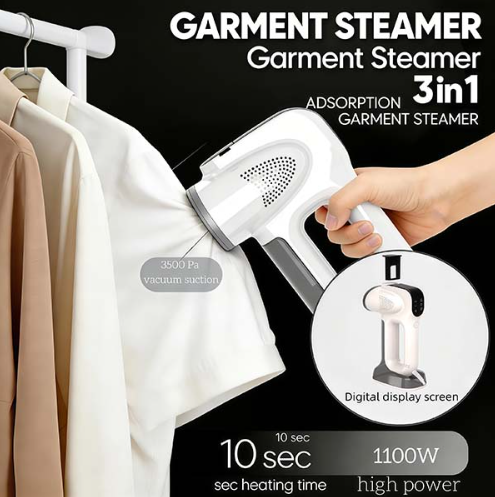
Shenzhen Baiyisen Health Technology Co., Ltd. (short name: Baiyisen Technology) was established in 2016, with a core team that brings more than 15 years of experience in personal care and beauty appliance R&D, design, and manufacturing. The product portfolio extends beyond hair straighteners to include hair dryers, hot air brushes, handheld garment steamers, high-temperature steam cleaners, and infrared EMS combs. That breadth gives buyers a single engineering partner when they later want to extend their brand into adjacent styling and care categories.
Branding and Wholesale Support
Baiyisen works with global brands, distributors, and retailers on OEM and private label projects. Support includes logo customization (printing or laser marking depending on model), color options, custom packaging, manuals, and plug configurations for different markets. The exact customization scope is confirmed per model, so you know exactly what applies to the SKU you are buying rather than a generic "fully customizable" promise.
Production and Supply Capabilities
For reference, the factory operates the following production setup. These figures should be confirmed against the latest quotation, but they give a concrete baseline for comparison:
|
Item
|
Details
|
|
Established
|
2016
|
|
Production area
|
15,000 m² standardized facility
|
|
Production lines
|
6 professional lines
|
|
Production equipment
|
12 advanced manufacturing machines
|
|
Warehouse area
|
5,000 m² for inventory and order fulfillment
|
|
Standard single-color product MOQ
|
From 1,000 units (conditions vary by model and customization level)
|
|
Export markets
|
70+ countries across Europe, Asia, North America, South America, and the Middle East
|
|
Common certifications
|
CE, RoHS, FCC, UL, CB, with documentation matched to specific models and target markets
|
The engineering team works with materials such as ABS, PC, aluminum alloy, and PA66+GF30%, and supports OEM projects that require complex structural design and electronic integration. This makes Baiyisen a viable option for brands looking for a reliable hair straightener manufacturer in China that can handle both standard private label and deeper custom development.
How to Start a Private Label Hair Straightener Project with Baiyisen
A typical project follows a short, clear path:
-
Tell Baiyisen your target market (country, voltage, plug type) and estimated annual or first-order volume.
-
Select a hair straightener model from the catalog, or share a reference product you want developed.
-
Confirm logo method, housing color, packaging design, and any manual or labeling requirements.
-
Receive a written quotation covering MOQ, unit price, lead time, and available compliance documents for your market.
-
Approve a pre-production sample before committing to mass production.
-
Place the bulk order and arrange pre-shipment inspection if desired.
Frequently Asked Questions About Private Label Hair Straightener Manufacturers
1. What Should I Look for in a Private Label Hair Straightener Manufacturer?
Prioritize product quality, branding customization options, MOQ transparency, production and on-time delivery capability, compliance documentation for your target market, and a clear after-sales process. Always confirm a pre-production sample before placing a bulk order, even if the unit price is attractive.
2. What Is the Typical MOQ for Private Label Hair Straighteners?
There is no single number that applies across all factories. MOQ depends on the model, logo method, housing color, packaging depth, and production schedule. Standard single-color models often start around 500 to 1,000 units, while custom colors or fully custom packaging can raise the threshold. Get a written MOQ for your specific configuration rather than relying on a generic figure.
3. Can I Add My Own Logo to a Hair Straightener?
Most private label manufacturers support some form of logo application, commonly through pad printing or laser marking. The available positions, recommended process, setup cost, and minimum quantity depend on the model's surface material and construction. Ask the supplier to show examples of previous logo work on similar models.
4. How Long Does Private Label Hair Straightener Production Take?
It depends on sample approval, branding artwork, packaging preparation, component availability, and factory scheduling. Buyers should ask suppliers to separate the sample phase (often 7 to 15 working days) from the mass production phase (often 30 to 45 working days), and to confirm both in writing.
5. What Certifications Should a Hair Straightener Manufacturer Provide?
It depends on the product design and your target market. European sales typically require CE and RoHS documentation; the US market involves FCC and UL/ETL considerations; other regions may require UKCA, PSE, SAA, or equivalent marks. The right approach is to identify your market first, then ask the supplier to provide test reports that match the specific model, voltage, and plug you are importing.
6. Should I Order Samples Before Placing a Bulk Order?
Yes. A sample lets you verify heating speed, temperature stability, plate finish, logo application, packaging quality, and overall feel against your brand expectations. Treat the sample as the reference standard that the bulk order must match, and keep it on file for comparison.
7. Can Small Brands Work with a Private Label Hair Straightener Manufacturer?
Yes, but the feasibility depends on the supplier's MOQ, existing model lineup, customization depth, and packaging requirements. For an emerging brand, starting with an existing standard model and light branding (logo on a standard color and neutral or lightly custom packaging) is usually the most cost-effective path. Full custom development becomes more practical once repeat order volume justifies the tooling and color-batch costs.